There’s something undeniably appealing about a buying a house with a fireplace. It’s often the heart of a room, promising cosy evenings and adding character to a property. But when you’re viewing houses, particularly in the UK with its varied housing stock, that charming fireplace needs more than a passing glance. Hidden issues with chimneys and fireplaces can lead to serious safety risks (including fires and carbon monoxide poisoning) and potentially eye-watering repair bills down the line.
Standard home surveys often don’t delve deep enough into fireplace specifics. That’s why understanding what you can check initially, and knowing when to call in the experts, is crucial before you commit to buying. This guide will walk you through the essential checks for any UK homebuyer considering a property with a fireplace, whether it’s a traditional open fire, a wood-burning stove, or a gas fire.
Why Inspecting the Fireplace and Chimney is Non-Negotiable
- Fire Safety: Creosote build-up in chimneys is flammable, and damaged flues or incorrect installations can allow heat to reach combustible parts of the house structure.
- Carbon Monoxide (CO) Risk: This odourless, colourless gas is deadly. Blocked chimneys or faulty appliances are common causes. UK regulations require CO alarms in rooms with fuel-burning appliances for a reason.
- Structural Problems: Chimney stacks can lean, crack, or suffer from mortar failure. Internal flue damage can be hidden.
- Damp: Water ingress through faulty flashing or porous brickwork is common.
- Costly Repairs: Relining a flue, rebuilding a stack, or replacing a non-compliant stove can cost thousands of pounds. Identifying problems before you buy is vital.
- Is it Even Usable? Don’t assume it works safely or efficiently. Some are purely decorative.
Your Initial Fireplace Checklist: What You Can Check During a Viewing when buying a house with a fireplace
While a professional inspection is essential for a definitive assessment when buying a house with a fireplace, you can gather valuable information during your viewings. Get permission before touching anything!
1. The Exterior Chimney Stack (Ground Level View):
- Structure: Does the stack look vertical, or is it leaning? Are there any obviously cracked or missing bricks? Is the mortar between the bricks crumbling? Look for white staining (efflorescence) which can indicate moisture problems.
- Pot/Cowl: Is the chimney pot on top intact? Is there a cowl fitted (often helps with rain and downdraught)? Is there a bird guard if appropriate (prevents nesting)?
- Flashing: Look where the chimney stack meets the roofline. Is the lead flashing (the grey metal seal) flat and neat, or is it peeling, torn, or lifted? This is a common water entry point. Binoculars can be helpful here.
2. Inside the Room: The Fireplace Area
- The Hearth – Critical Safety Zone: The hearth is the non-combustible area directly in front of and around the fireplace opening or stove. Its job is to prevent sparks or hot embers from reaching combustible materials like carpets or wooden floors.
- Material: Is it made of stone, slate, tile, concrete, or another non-combustible material?
- Condition: Are there cracks or is it uneven?
- Dimensions (Important but Complex!): UK Building Regulations (Approved Document J) specify minimum hearth dimensions, which vary significantly based on the type of appliance (open fire vs. stove), whether the stove doors can be opened during operation, and manufacturer instructions.
- General Guide (Verify with a Professional): For a standard open fireplace or a stove that can be operated with doors open, you’d typically expect the hearth to project at least 300 mm (approx. 12 inches) in front of the fireplace opening and extend at least 150 mm (approx. 6 inches) to each side.
- For stoves designed only to be used with doors closed, the projection might sometimes be smaller (e.g., 225 mm), but this depends heavily on the specific stove and its installation instructions.
- Thickness: If the hearth sits on a combustible floor (like floorboards), it generally needs to be significantly thicker (e.g., 125 mm constructional hearth) than if it sits on a solid concrete floor (where a 12 mm superimposed hearth might suffice).
- Key Takeaway on Hearths: Visually check if the hearth looks substantial and provides clear protection well beyond the fireplace opening. Note any concerns, but always get professional verification (e.g., from a HETAS engineer for solid fuel) to confirm compliance. Never assume visual checks are sufficient for hearth regulations.
- Firebox: Look inside the opening where the fire burns. Are the firebricks lining it cracked or crumbling? Is there excessive soot or tar staining?
- Damper: If it’s an open fire, there might be a handle or lever to operate a damper (a plate in the flue to control airflow). Does it move freely? (Ask permission first). A seized damper can cause problems.
- Smoke Staining: Look at the wall and mantelpiece above the fireplace opening. Are there heavy black smoke stains? This could indicate the chimney isn’t drawing properly.
- Surroundings: Check the fireplace surround, mantelpiece, and nearby walls. Are there any signs of scorching, blistering paint, or heat damage? Ensure combustible materials aren’t too close.
- Air Vents: Modern stoves, especially those over 5 kW, often require a dedicated air vent in the room to ensure sufficient oxygen for combustion. Look for wall or floor grilles, especially near the appliance. Lack of ventilation is a safety issue.
- Carbon Monoxide (CO) Alarm: Is one installed in the room? Check its expiry date or test button if accessible (ask first!). Its presence is a legal requirement in many situations and always best practice.
3. When buying a house with a fireplace, Ask the Seller / Estate Agent:
- When was the fireplace/stove last used?
- Crucially: When was the chimney last swept? (Ask if they have a certificate).
- Are there any known problems?
- Do they have installation documents? (A HETAS certificate for stoves installed after 2005 is vital evidence of compliant installation; Gas Safe records for gas fires).
When to Call the Professionals (Essential Before Buying!)
Your initial checks might raise red flags, but even if everything looks okay, a professional inspection is vital for assessing the hidden parts buying a house with a fireplace.
- Registered Chimney Sweep: They can perform a thorough sweep and visual inspection, often including a CCTV survey to check the internal flue condition for blockages (nests, debris, soot build-up), cracks, and liner type/condition. Find members via UK trade bodies like the Guild of Master Chimney Sweeps or APICS.
- HETAS Registered Installer/Engineer: Essential for wood burners and solid fuel appliances. They verify safe, compliant installation against Building Regulations (Part J) and check the appliance itself.
- Gas Safe Registered Engineer: The only person legally allowed to work on gas fires. Essential for checking safety and compliance.
A Professional Inspection Will Cover:
- Detailed structural assessment of the stack.
- Internal flue inspection (often via CCTV).
- Assessment of liner condition (or lack thereof).
- Checking for dangerous creosote levels.
- Verification of correct appliance installation and ventilation.
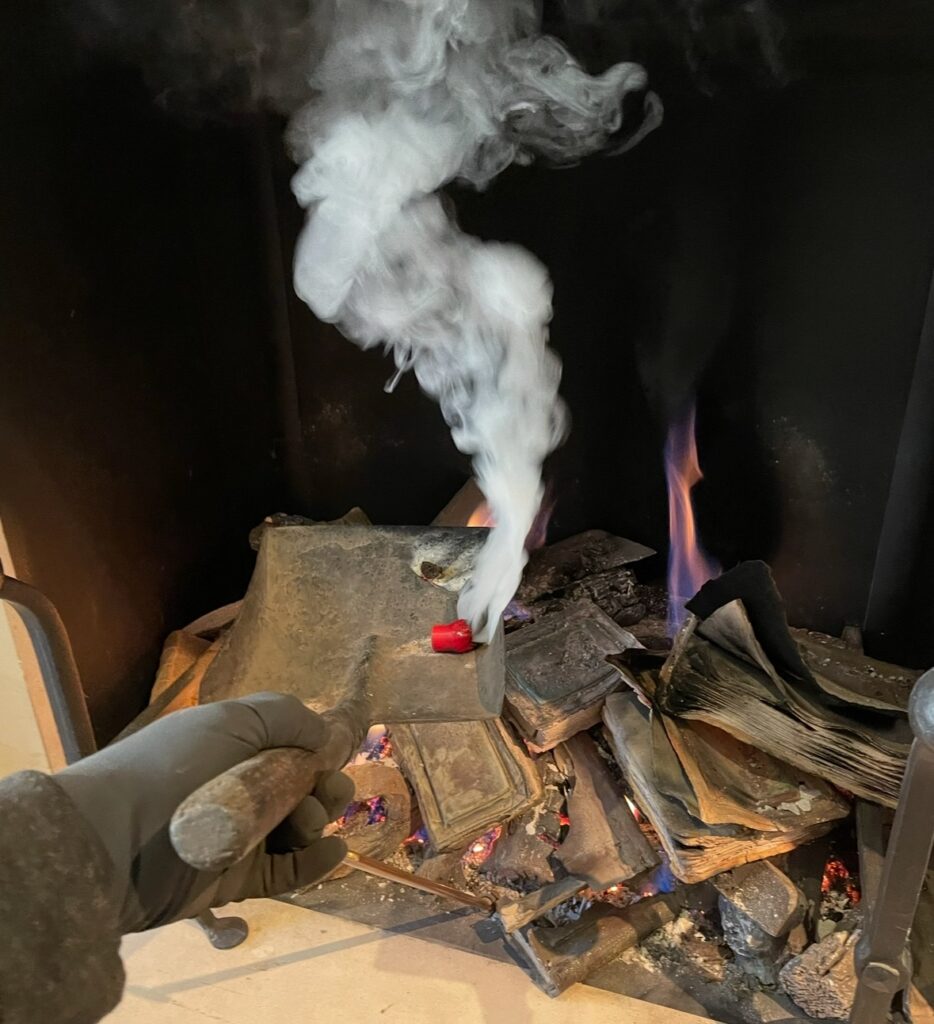
- Smoke draw test to ensure the chimney pulls effectively.
Understanding Paperwork (UK Specific)
- HETAS Certificate: Not legally required to sell, but vital proof of compliant installation for solid fuel stoves. Its absence necessitates a full inspection before use.
- Gas Safe Record: For gas fire installations/servicing.
- Sweeping Certificates: Show a history of maintenance.
- Building Regulations Compliance Certificate: If work wasn’t done via a scheme like HETAS.
Common Problems & Red Flags Summarised:
- Cracked flue/liner
- Blockages (nests, soot, rubble)
- Heavy creosote
- Damaged/leaning stack
- Incorrect/undersized hearth
- Poor ventilation
- No CO alarm
- Missing paperwork
Using the Inspection Findings when buying a house with a fireplace
If issues are found, the professional report gives you clear evidence:
- To Negotiate: You may be able to negotiate the house price to cover repair costs.
- To Budget: Understand the work needed after you move in.
- To Decide: In severe cases, you might decide not to proceed with the purchase.
When buying a house with a fireplace Peace of Mind is Priceless
A fireplace can be a wonderful asset, but don’t let its charm overshadow the need for due diligence. Carry out your initial checks, ask the right questions, and most importantly, invest in professional inspections before you exchange contracts. A few hundred pounds spent on surveys by qualified Chimney Sweeps, HETAS engineers, or Gas Safe engineers could save you thousands in repairs and ensure your new home is safe and sound.
Ready to take the next step? Contact us to organise a new homeowner chimney inspection.

Disclaimer: This blog post provides general guidance for UK homebuyers buying a house with a fireplace. It is not exhaustive and is not a substitute for professional advice or surveys. Building Regulations and safety standards can be complex and vary depending on the specific appliance and installation. Always consult qualified professionals (e.g., RICS surveyors, HETAS engineers, Gas Safe engineers, certified chimney sweeps) for advice specific to the property you are considering purchasing.