


Is there a bird stuck in the chimney?
From time to time, especially in warmer months, birds may fall into your chimney. It’s mostly happens in the summer because the heat can disorientate the birds, and the sun can dazzle them. Once a bird is in your chimney it’s very difficult for them to get out. Nobody wants a bird trapped in a chimney.
The majority of the jobs relating to trapped birds we attend are in London. London is a real hotspot for trapped pigeons in chimneys, though they can sometimes be much larger birds such as crows or owls.
How do I know if a bird is in the chimney?
This is a difficult question as it depends on the type of chimney and type of appliance.
If you have an open fire with a fairly old chimney, you will probably notice crumbly bits of mortar falling down the chimney if there is a bird trapped in the chimney. You may also hear a scratching sound, or a sound similar to that you hear coming from your chimney in very heavy wind – that sound is often followed by a downfall of soot or mortar.
If you have a wood burning stove, you often don’t notice as the bird gets stuck above the baffle plate in the stove and you won’t be able to see it. Sometimes, you’ll hear it or notice dust coming into the room through the vents in the stove.
If you have a blocked up chimney, you may hear scratching or a similar noise as you’d hear in an open fire.
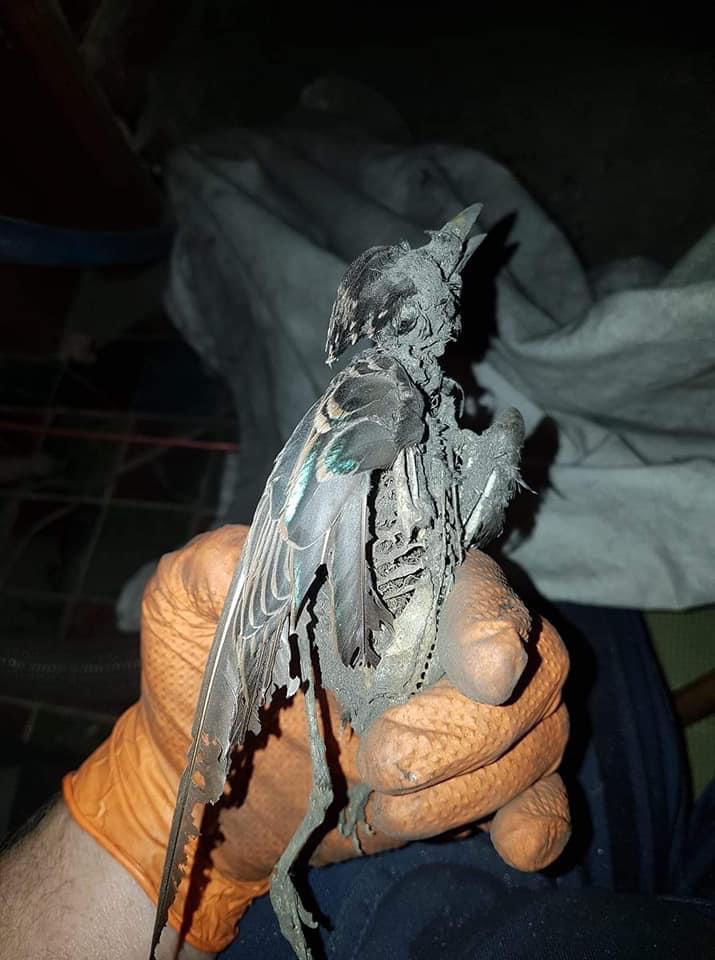
Sometimes, you just don’t know – there is no noise and there is no dust. In these cases, often what happens is the bird will dehydrate and eventually die. Once it dies, you’ll often notice a bad smell (the rotting flesh) and soon afterwards an abundance of flies.
How long will a trapped bird in a chimney survive?
The length of survival depends on the bird. Pigeons have been known to survive for two weeks or more. The reason for this is not widely understood. For this reason, in the case of pigeons, it is often a good idea to leave them in the chimney for a couple of days to lose a bit of energy. This is because if they are removed too soon, they fight too hard and this all too often results in damaged wings.
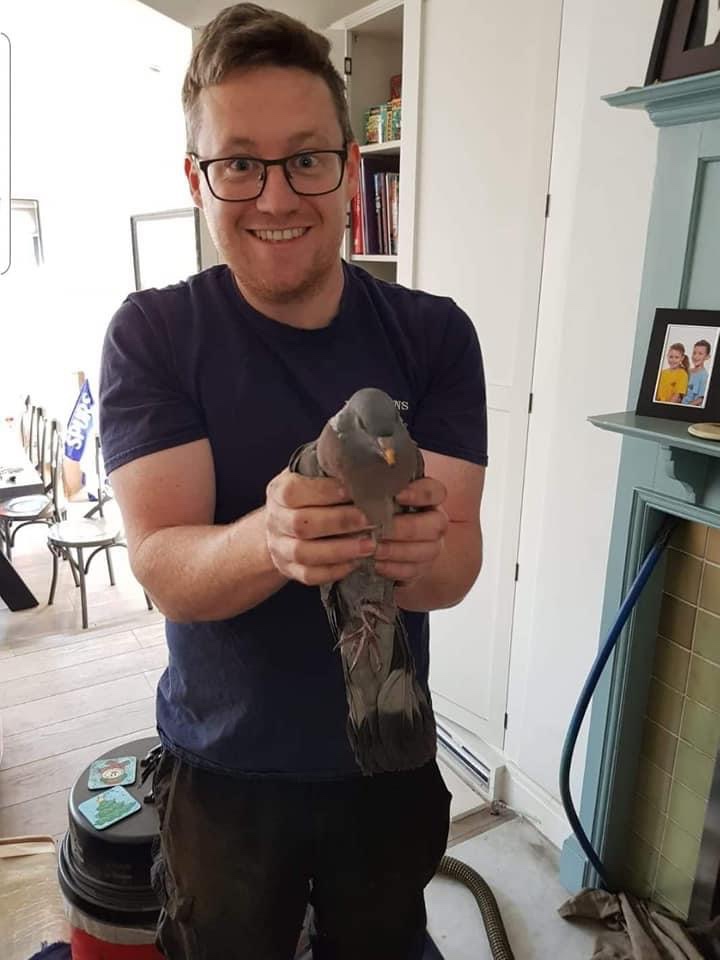
Other birds do not have such a good survival rate. A magpie will generally survive for 3 to 5 days, and larger members of the corvid family not even as long as that in some cases. More often than not – around 75% of the time – it is pigeons that we remove from chimneys. The next most common would be a magpie, then jackdaws, crows and the occasional parakeet and most upsettingly owls.
How do I get the bird out of my chimney?
If a bird is stuck in your chimney, we are the people to call! Often a bird will be sitting on a ledge further up the chimney. We initially try putting a stiff brush up the chimney in the hope the bird will sit on the brush and end up being lifted out of the pot so it can happily fly away. If that’s unsuccessful, we use a slightly smaller brush to dislodge the bird so it gradually falls further down the chimney until it’s low enough down that we can grab it and release it (once we’ve cleaned the soot from its eyes etc). If we can’t find it we have camera systems to put up the chimney.
What if there is no fireplace?
If there is no fireplace or opening in to the chimney at the bottom, the bird cannot be removed without breaking into the chimney. Sometimes if there is an air vent in the house into the chimney it can be removed through there, but bear in mind it may need to be enlarged. A bird cannot be removed from the top of the chimney in almost all cases.
How do I stop birds getting into my chimney?
The only real preventative measure is fitting a cowl to your working chimney or a cap to your disused chimney. In our opinion, disused chimneys are the most important to have capped off. As a rule, you’ll have more disused chimneys in your house than working chimneys, this means the probability of a bird falling into a disused chimney is higher. The reason this is a problem is most disused chimneys are closed in the room. The result of that is you’ll likely not know it’s fallen down until the bird has perished and you begin to smell the rotting flesh and notice the maggots and flies.
Will a dead bird in a chimney smell?
Dead, rotting birds do not in all cases cause a noticeable smell. If the chimney has a good draught, the smell of the bird decomposing will be drawn up and out of the chimney. Sometimes, for various reasons (the mystery of physics), chimneys don’t have an updraught – the air blows down the chimney. See HERE for an explanation of why this happens. Unfortunately, summer is when chimneys are quite likely to blow down. This is when birds are more likely to fall into a chimney and get stuck. In most cases the smell will be drawn up the chimney. We find if people are simply reporting a smell and no other symptoms to suggest the problem is chimney related, it is often a rodent that has died below the floorboards.
Why do birds get trapped in chimneys
They certainly do not do it on purpose. It almost always happens in the warmer, sunnier months. We are contacted round 500 times a year about birds in chimneys. In excess of 400 of those will be from April – August. The main reason for this is the glare from the sun. Often the birds fall into chimneys when the sun is low in the early evening. They try to land on the rim of the chimney pot, but due to the glare, misjudge and end up inside the chimney. Once they are in, generally the wingspan is too large to allow them to fly out. Sometimes it is partly because the bird is slightly dehydrated. The tends to be more likely in built up areas. Whatever the reason, the last thing you want is a bird trapped in your chimney.
Sometimes the RSPCA can help, but not if the bird is trapped in the chimney in an inaccessible place. Only if it a bird is stuck in the chimney in a place that can be reached by hand.
Step by step guide for removal of a bird trapped in a chimney
- Close any doors to the room but open the windows in case the bird flies out
- If possible, check up the chimney using a torch and a mirror pointed up the chimney. If you can see the bird, make note of which kind it is
- Next cover the front of the fireplace with a sturdy board to prevent the bird flying into the room and injuring itself or making a mess
- Phone your local Chimney Sweep specialising in bird removal
- If you don’t have a fireplace, be prepared to have the sweep break a hole in your chimney breast for removal
- If you decide not to have the bird removed at all, be aware there will be maggots and flies
- Have a bird guard installed on your chimney to stop it happening again




[…] In these cases, often what happens is the bird will dehydrate and eventually die. Once it dies, you'll often notice a bad smell (the rotting flesh) and soon afterwards an abundance of flies. via […]
[…] If you have an open fire with a fairly old chimney, you will probably notice crumbly bits of mortar falling down the chimney. You may also hear a scratching sound, or a sound similar to that you hear coming from your chimney in very heavy wind – that sound is often followed by a downfall of soot or mortar. via […]
[…] things first. If you suspect there’s a bird in your chimney, visit our dedicated ‘bird stuck in chimney‘ page. Otherwise keep […]
[…] the best way to remove a trapped pigeon is from the roof. However, this is rarely possible. The bird is likely trapped further down the chimney, and attempting removal from the top can push it deeper, […]
Comments are closed.