The history of chimney lining
Since 1966, all new chimneys must be installed with a suitable lining system. Prior to this date, chimneys were built simply using bricks and mortar with a coating of lining known as pargeting. This method was fine while in good condition, but deteriorated over time. Deterioration was especially an issue for chimneys built in the 20th century when there was a tendancy to build with sand and cement mortar rather than lime.
Pargeting
Chimney ‘relining’ (the repair of the lining of an already installed chimney) at this point was difficult. There were professional ‘pargers’ who would reapply lime pargeting. This was similar to the current Eldfast method, as can be seen in the image below courtesy of Eldfast LTD.
Application of lining systems like this is not easy and to do so properly can be very time consuming. One of the main obstacles is the pressure on the building.
The pressure down upon the top of the chimney can be great. This is due to the winch which is pulling up the applicator as can be seen below is exerting a lot of force on to the top of the chimney. In some extreme cases this has been known to partially ‘crush’ the top courses of bricks on the stack.
As well as this there is a lot of outward pressure during application, meaning the midfeathers (the bricks inside the chimney seperating flues) can be pushed out if the method is used inappropriately or without great care.
Used in the right setting though, it results in a solid and long lasting repair. One of the greatest benefits is its ability to withstand chimney fires – it’s manufacturers claim it’ll only become stronger during a chimney fire.

Cast in situ liners
In the 1970’s, cast in situ type liners were developed by companies like Thermocrete. The principle of these is that an inflatable former is passed down the chimney, and the area around it is filled with refractory concrete in order to create a new smooth, round lining and to hopefully fill any cracks in the brickwork.

Unfortunately though it had some limitations. If the brickwork internally was at all loose, the pressure of the concrete filling the chimney could push the brickwork out of its normal position and result in the lining not being complete, in the process filling adjacent chimneys. As well as that, it was found the former was difficult to centralise meaning sections of the chimney may not have any lining material applied at all.
Used at the right time and in the right way however, it is still to this day a very good and long lasting repair method.
Stainless Steel Flexible Liners
In the 1980’s came the introduction of smooth bore stainless steel flexible liners. These were initially brought to England by ‘Kedddy’, a French chimney manufacturer now known in the UK as ‘Poujalat UK‘. These were similar in appearance to the flexible liners used for gas boilers, once known as ‘copex liners’. The appearance was where the similarities ended however.
The newer version was suitable for solid fuel. This was because being stainless steel, with two ‘layers’ of stainless steel used in their production and a smooth inner bore, these were much more resistant to the higher temperatures and risks of corrosion caused by solid fuels.
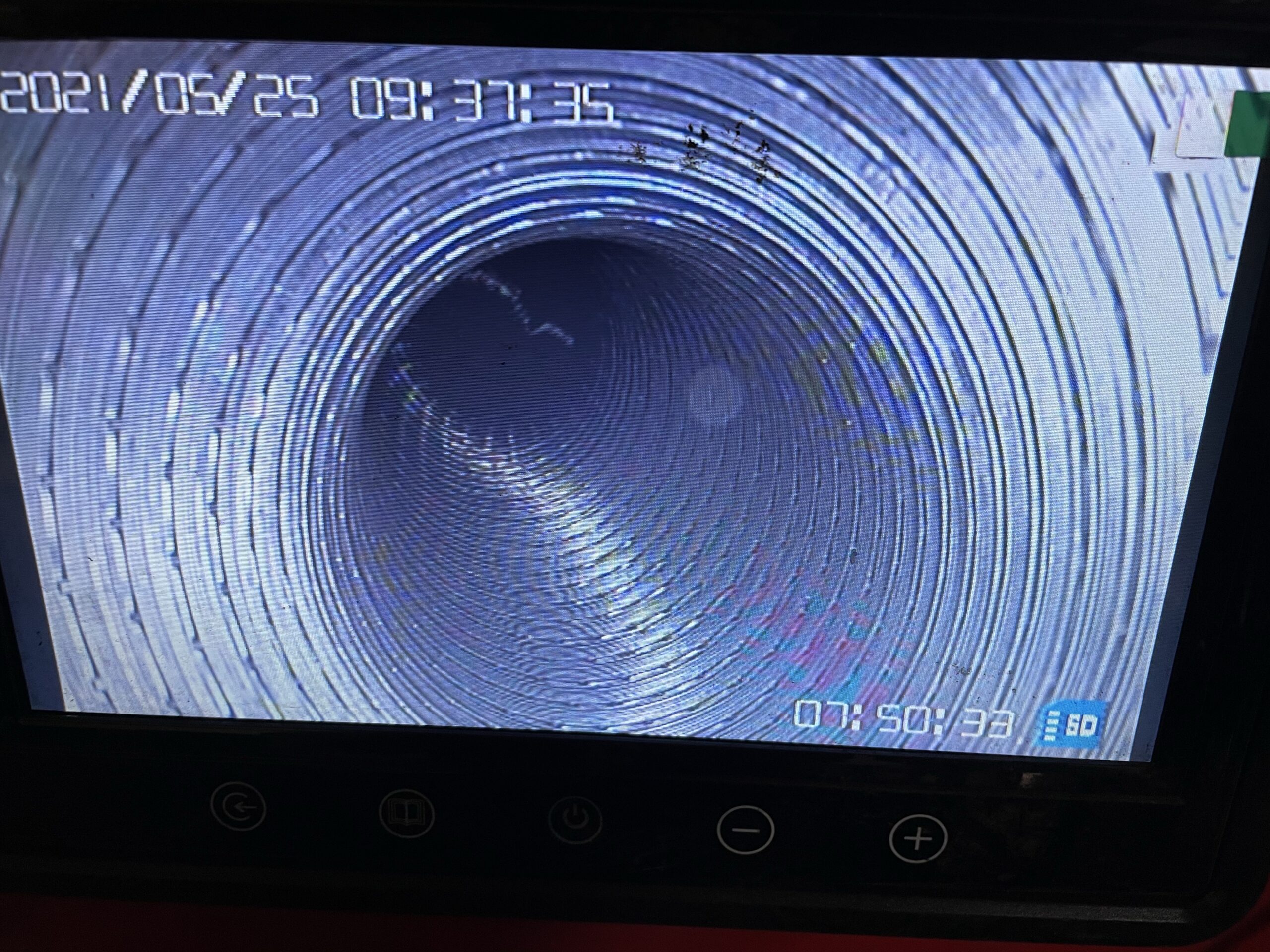
As usual, there are some drawbacks. They don’t cope particularly well with closed appliances burning smokeless fuel. This is due to the possibility of the air being shut down and the smoke condensing in the chimney. This smoke containing sulphur then starts to corrode the liner. Other non metallic types of chimney liner aren’t affected so severely by acidic condensates.
Unlike the Eldfast system, stainless steel liners will require replacing in case of chimney fire. Of course in an ideal world chimney fires won’t occur, but they can and do. A stainless steel liner is designed to temporarily contain a chimney fire, but isn’t designed to be in a fit state once that has occurred.
Why do chimneys need lining?
One reason is the condition of the chimney.
Over time, the chimneys original lining can degrade to failure. Once this occurs, smoke is liable to leak from the chimney being used into other rooms, other properties, other chimneys or elsewhere instead of being contained within the active flue.
Leaks aren’t always obvious to find. Very small amounts of smoke or fumes can be leaking into various places, but the low levels can make it difficult to notice. Carbon monoxide has no smell, so this can be especially problematic with gas appliances that don’t have discernible smoke. However, efficient solid fuel appliances in some cases produce little to no smoke, so this equally can be difficult to spot.
The best way to be sure your chimney is sound and without leaks is an integrity test carried out by one of our specialists engineers. This will confirm the soundness of the chimney and advise, if necessary, which lining method would be a suitable repair.
Another reason for lining a chimney is the cross sectional area.
With the improvements in efficiency of modern wood burners, Victorian and 20th century chimneys can be a tad oversized to allow their proper function.
If having a wood burner installed into an existing masonry chimney, a register plate is used. The stove pipe passed through the register plate, and traditionally the pipe would terminate just above the register plate.
With old inefficient burners this wouldn’t necessarily be an issue. Given the lack of efficiency, plenty of the heat from the fire would end up in the chimney