



Are stoves causing indoor pollution?
There have been a few articles in the media recently following a study conducted by Sheffield University. The study involved testing levels of tiny particulate matter in homes while a stove is alight – specifically stoves that are ‘Defra exempt’. Defra exemption means they are permitted to burn wood in a smoke control area – on appliances that are not ‘Defra exempt’, only smokeless fuels may be used. An interesting point is that the levels detected were around the same as you will find if using a toaster.
Before continuing, it is worth mentioning that it has been well known in the ‘solid fuel industry’ for quite a while that there is an issue with certain models of stove ‘spilling’ smoke in to houses and affecting indoor air quality. So far though HETAS (heating equipment and testing approval scheme, supported by Defra) appear to have done little to overcome this problem.
In regards to the study, there are a few things we don’t know.
1. Were the stoves involved in the study regularly maintained by professional chimney sweeps?
A dirty chimney will have far less draught which means the smoke doesn’t escape the chimney as freely as it should. It is very common for a very dirty chimney to spill smoke in to a room – this is why it is advised chimneys are swept up to 4 times a year to ensure the chimney is working as it should
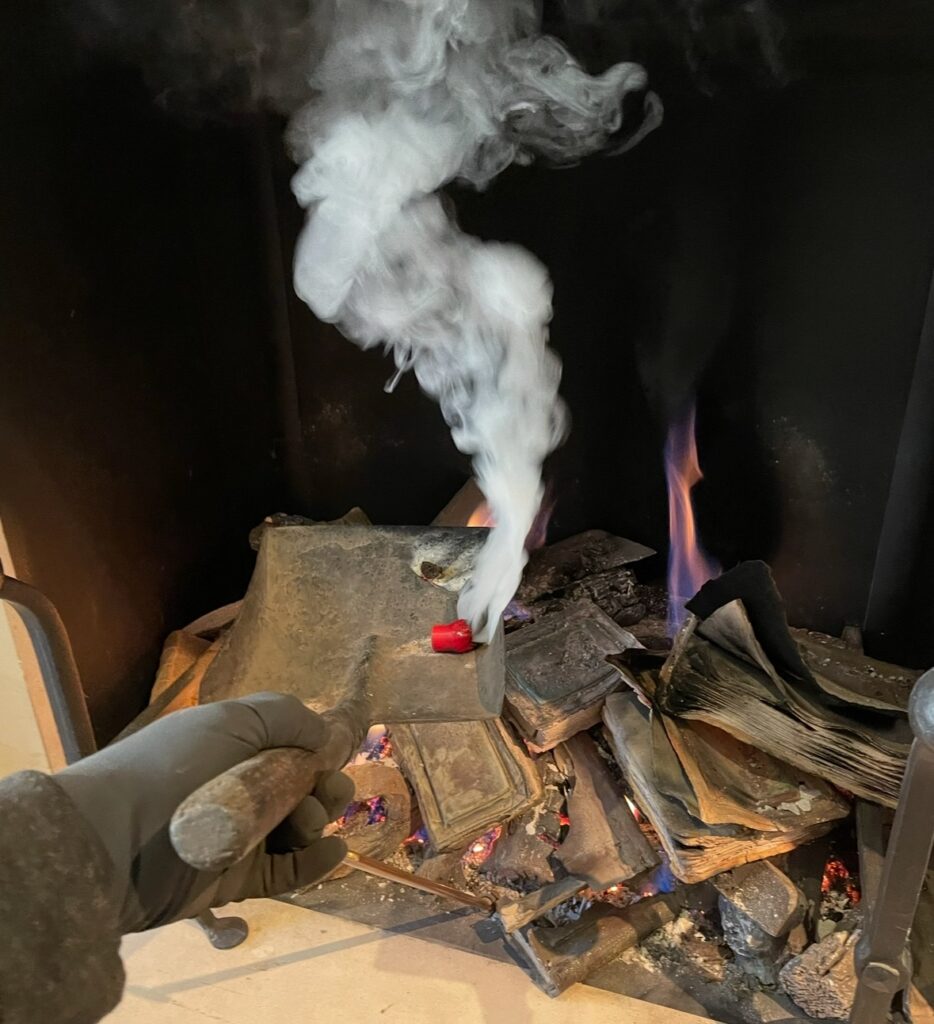
As well as the cleaning, a professional chimney sweep (ideally qualified with the NVQ in Chimney Sweeping), will carry out a smoke test.
The smoke test involves lighting a smoke pellet in the stove which produces lots of white, smelly smoke. The sweep will then adjust the vents and open the stove door to make sure there is no smoke entering the house. Given the nature of this smoke, it is clear to see if anything is coming into the room or in fact air is being ‘drawn in’ to the stove.

2. Were the users of the appliances burning and refuelling them correctly?
When a stove is installed by a member of a competent person scheme such as OFTEC or HETAS, the installer is required per BS EN 8303 to commission the appliance. This involves teaching the resident how to properly use the appliance as explained in the manufactures instructions.
Unfortunately, many installers fail to carry out this essential part of the installation service.
One issue users have is not getting the chimney and stove hot enough quickly enough – this results in a smokey fire which may not establish properly at all; the logs may be burning, but they’re just smouldering and not hot enough for an efficient burn. When a stove is used like this, the stove will produce more smoke that it is designed to and it won’t escape quickly enough, resulting in potential smoke spillage when the door is opened.
Problems can also occur when the vents aren’t used properly, such as closing the vents down too soon or too much fuel being placed on the fire. Even things like when the stove is refuelled can cause a massive issue; generally you should refuel a stove when the wood is just glowing red embers and there are no longer big flames.
The most common cause though is opening the stove door too quickly. Before opening the stove door you should fully open the vents, leave it a couple of seconds and then open it a couple of centimetres and then open fully. If you quickly open the stove door the pressure will pull smoke and particles into the room, even if it is burning efficiently with little to no smoke. All the above scenarios should be covered during commissioning and handover by the installer.

3. Is the installation designed correctly?
Another responsibility of the installer is to ensure the appliance and chimney is designed correctly. Some of the aspects of the design that can cause an issue are:
- Ventilation into the room. If there isn’t enough air coming into the room, the chimney and fire won’t work properly. The chimney needs a constant supply of air to enable its draught. Too little air results in less draught and more smoke spillage.
- Design of the chimney. If a chimney isn’t tall enough in relation to the surrounding building(s); is located in a pressure zone; an entirely external chimney that is exposed to the elements and susceptible to getting cold and damp; inappropriate chimney terminal etc the draught will be compromised or in some cases non existent.
- Size of the stove. If a stove is installed with a heat output that is too high for the room. If it is, there is a tendency to run it with the vents shut down. This means too little oxygen and a lot of smoke.
If all of the above factors are not taken into consideration and overcome, you will be left with a stove that is smokey. It will also quite possibly spill smoke heavily into your house.
4. Were they poorly designed stoves that are prone to smoke spillage?
There has been a drive over the past few years to design stoves that are as ‘environmentally friendly’ as they can be. But is there a trade off between indoor and outdoor air quality? There are two main ways that manufactures achieve this.
- Probably the most common as it is easiest and cheapest to achieve is heavily ‘baffling’ the fire box. This means that the stove is designed so that the smoke is restricted and stays inside the stove for as long a possible. The reason for this is to try to ensure as much particulate matter as possible is burnt off by the heat of the fire. This is often supplemented by ‘tertiary air’ which are air inlets at the rear of the firebox which brings oxygen into the firebox, ideally preheated, and helps burn off more of the particulate matter.
- A more difficult and expensive method is to create lots of turbulence in the fire box. This is generally achieved by what is called ‘long path airwash’. This is slightly different to airwash on most stoves. The idea with the long path version is that there is an air inlet at the bottom of the stove somewhere which takes the air through the stove in a channel that is sealed from the fire. This allows the air to heat up before entering the fire. This air rises quickly through these channels as it is hot and is pushed into the stove at the top of the fire box. As the air pushes down, it brings the smoke back down into the fire and hopefully burns off plenty of the particulate matter. This process is often supplemented by tertiary air for similar reasons as method 1 above.
As you can see above there are two very different methods for burning off harmful particles produced by a fire. The benefit to both is that they reduce the harmful emissions being released into the atmosphere.
There are few drawbacks to using the method in option 2 other than the cost and extra engineering required, but there is a big flaw with method 1. If you baffle the stove heavily you will likely have no problem with the stove when it is alight and the door is shut. However, when you open the stove door, as there is a very small aperture for the smoke to escape the firebox through, it is probable that particles and/or smoke will end up escaping the stove into your house. The manufactures of heavily baffled stoves often advise that you only ‘refuel the stove when the wood has burnt down to embers’. This is because when it has burnt down to embers there is little to no smoke. However, particles are still being released.

Were there any flaws in the study?
There were a few obvious flaws. I don’t particularly want to nitpick and won’t make an attempt to denigrate the study or those who carried it out as it most certainly was necessary. In some ways it may help the stove industry improve their designs.
However, there are a couple of glaringly obvious factors that should be adjusted in any research going forward.
- The appliances in the study don’t appear to have been checked for compliance to building and installation regulations to ensure they’re safely installed with well functioning chimneys.
- The maintenance record of the appliances was not taken in to consideration before the study was carried out.
- Budget air monitoring equipment was used which was not calibrated during the study. This was highlighted in the study as a potential limitation.
- A lack of comparative data. Similar studies can be found online that show toasting bread and grilling bacon produces higher levels of PM2.5 in the house than the study on stoves. The numbers quoted in the research mean little to the layman without comparisons from real life.
So what does this all mean?
In short, there is a problem with stoves and indoor air quality, and there has been for a number of years. This problem however is mostly limited to certain, and generally low budget, stoves.
Without knowing which stoves were used in the study I cannot advise on the particulars more than that, but given that the majority of stoves rely on heavily baffling the firebox to reduce emissions, there is a strong likelihood most if not all of the appliances in this study would fit in that bracket.
In truth, there should be a push to have smoke spillage a fundamental part of the testing of stoves brought to the market. Currently there isn’t, but I believe The Federation Of British Chimney Sweeps are currently pushing for the Stove Industry Alliance and HETAS to ensure this is common practice.
How can I stop this being a problem for me?
I strongly advise that before deciding to purchase a stove you invite a professional, NVQ qualified chimney sweep or time-served stove installer to carry out an inspection of your chimney if you have one.
The chimney is like the engine of the stove; if that isn’t working properly, the stove won’t either.
Once it has been established that your chimney is suitable and working well, the chimney sweep can then recommend a stove or stoves that they have a deep understanding of and experience with that they are sure will be suitable for your chimney.
More often than not the stove will be fitted in conjunction with a flue lining that will be inserted into the existing chimney. This helps the draught and efficiency as the flue gases heat and accelerate much more quickly, and as the flue is narrower, the velocity of the gases increases even more.
Once you have your stove fitted, make sure the installer sits down with you and lights the fire, talking you through how to light it, how to refuel it and how to burn it efficiently.
Subsequently, get an NVQ qualified sweep in every year to check the chimney and stove for signs that it isn’t burning properly, per advice from Defra’s Burn Better campaign.
When looking for a stove that will not spill smoke into your property, you would be well advised to start the search with Woodwarm Stoves. You would be hard pushed to find anybody in the solid fuel industry that doesn’t highly recommend this brand.
Thank you for reading. If you feel anything should be added, would like to ask any questions or would like any clarification, please get in touch using our contact page.
Useful links:
Woodwarm Stoves: http://www.woodwarmstoves.co.uk
Defra’s Burn Better Campaign: https://uk-air.defra.gov.uk/library/burnbetter/
Federation of British Chimney Sweeps: http://www.federationbcs.com
Hetas: http://www.hetas.co.uk
Chimney Sweep NVQ provider: http://www.chimneyskillstraining.co.uk

[…] stoves. None of the issues found when shopping in the budget aisles here; no dirty glass, smoke spillage, peeling paint or regular replacement of […]
Comments are closed.