If you’ve typed “damp on chimney breast,” “wet patches chimney,” “salt stains fireplace,” or similar searches, you’re in the right place. Understanding the type of damp affecting your chimney breast is the crucial first step towards finding the right solution. This blog post will guide you through the common culprits.
Why Are Chimney Breasts So Prone to Damp?
Several factors make chimney stacks and the internal chimney breast susceptible:
- Exposure: Chimney stacks project above the roofline, bearing the full brunt of wind and rain.
- Complex Structure: They involve junctions with the roof (flashings), pots, cowls, and internal flue structures, offering multiple potential points for water entry.
- Porous Materials: Bricks and mortar are naturally porous and can absorb rainwater over time, especially if pointing or weather protection is failing.
- Redundant Flues: Unused flues can become cold columns, prone to condensation, and may lack adequate ventilation or capping, allowing rain direct access.
- Hygroscopic Salts: This is a big one, especially for older chimneys. We’ll delve into this later, but residues from burning fossil fuels (soot) contain salts that can absorb moisture directly from the air.
Let’s break down the different types of damp you might encounter on your chimney breast:
Types of Damp Affecting Chimney Breasts
1. Penetrating Damp (Rainwater Ingress)
- What is it? This is perhaps the most common cause of damp high up on a chimney breast or near the stack. It occurs when rainwater penetrates the building fabric from the outside.
- Why does it occur on chimney breasts?
- Defective Chimney Stack: Damaged or missing pointing (the mortar between bricks), cracked or porous bricks on the stack itself allow rain to soak in.
- Faulty Flashing: The lead (or alternative material) sealing the join between the chimney stack and the roof is crucial. If this flashing is damaged, cracked, loose, or improperly installed, water will seep through this vulnerable junction.
- Damaged Pots/Cowls/Capping: Cracked chimney pots, missing or inadequate cowls, or poorly sealed capping on a redundant flue can allow rainwater to enter the flue directly and soak down into the breast below.
- Porous Masonry: Over time, brickwork can become more porous and simply absorb excessive amounts of wind-driven rain.
- What does it look like?
- Distinct damp patches, often appearing or worsening after periods of heavy rain.
- Staining and discolouration of plaster and wallpaper, sometimes with brown or yellow marks.
- Potential for mould growth if the area remains damp for extended periods.
- Damage might be localised to one side (prevailing wind direction) or appear near the ceiling line where the stack enters the room.
2. Condensation
- What is it? Condensation occurs when warm, moist air comes into contact with a cold surface. The air cools, reducing its ability to hold moisture, which is then released as water droplets onto the cold surface.
- Why does it occur on chimney breasts?
- Cold Bridges: The chimney breast, particularly if it’s on an external wall or contains an unventilated, cold flue, can be significantly colder than the surrounding internal walls.
- Poor Ventilation in Flues: Unused flues that haven’t been properly ventilated (e.g., with air bricks top and bottom) can trap cold, damp air. This coldness radiates through to the chimney breast surface in the room.
- Lifestyle Factors: High levels of moisture production within the home (from cooking, showering, drying clothes indoors) combined with inadequate background ventilation increase the overall humidity, making condensation more likely on any cold surface, including the chimney breast.
- What does it look like?
- Often presents as diffuse damp patches, sometimes covering larger areas rather than distinct tide marks.
- Surface moisture – the wall may feel damp or cold to the touch.
- Black spotty mould (Aspergillus species) is a very common indicator of condensation.
- Often worse during colder months when heating is on, and external walls are colder.
- Can affect chimney breasts on internal walls too, if the flue itself is very cold and unventilated.
3. Hygroscopic Salts Contamination
- What is it? This is a complex but very common issue related to chimney breasts, often mistaken for ongoing leaks or condensation. Certain salts (‘hygroscopic’ salts) have the property of attracting and absorbing moisture directly from the ambient air, especially when humidity is high.
- Why does it occur on chimney breasts?
- By-products of Combustion: Burning fossil fuels like coal and wood over many years deposits soot inside the flue. This soot is rich in hygroscopic salts (chlorides and nitrates). These salts can migrate through the brickwork and into the plaster of the chimney breast over time.
- Previous Damp Issues: Even if an original leak (like penetrating damp) has been fixed, the water that passed through the masonry could have dissolved naturally occurring ground salts or the combustion salts mentioned above, carrying them to the surface. When the water evaporates, the salts remain in the plaster.
- What does it look like?
- Persistent damp patches that may appear even during dry weather spells, often worsening when atmospheric humidity is high (e.g., humid summer days, or during autumn/winter even without rain).
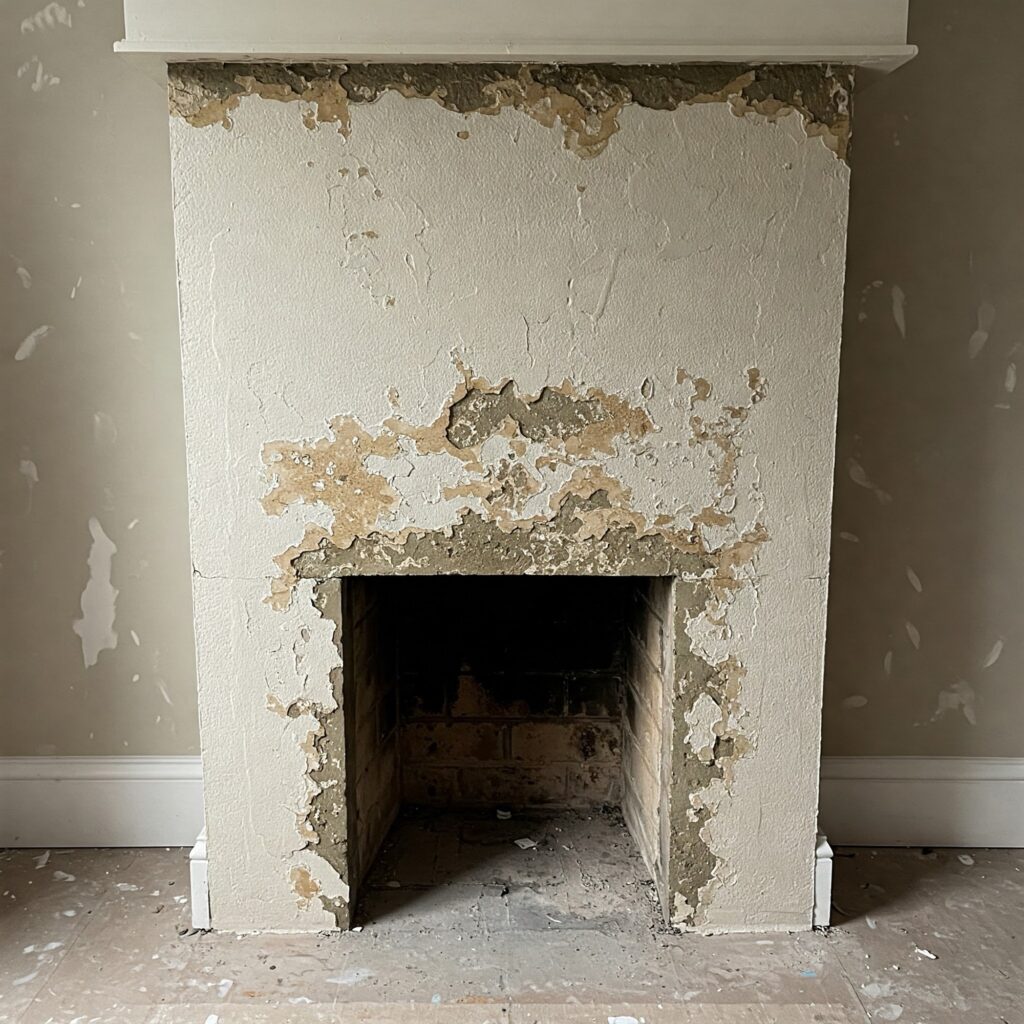
- Fluffy white crystalline deposits appearing on the surface – this is known as ‘efflorescence’. While efflorescence itself is just the deposit left after water evaporates, its hygroscopic nature means these salts can then draw new moisture from the air, making the area damp again.
- Staining and crumbling plaster, often with distinct ‘tide marks’ showing how far the moisture (and salts) have travelled.
- The dampness feels different – sometimes less ‘wet’ than a direct leak, but persistently slightly damp or clammy.
- Key Point: Even if the original source of water (e.g., chimney leak, past fire) is long gone, these salts can remain active in the plaster for decades, continuously drawing moisture from the air and creating the appearance of an ongoing damp problem. Standard re-plastering often fails if the salts aren’t properly addressed.
4. Rising Damp (Less Common High Up, Affects the Base)
- What is it? Rising damp is the process where groundwater is drawn upwards through the porous masonry of walls via capillary action.
- Why does it occur on chimney breasts? This primarily affects the base of the chimney breast on the ground floor only. It occurs if the damp proof course (DPC) at the base of the wall/chimney structure has failed, is bridged, or was never installed.
- What does it look like?
- A characteristic ‘tide mark’ stain rising from the skirting board level, typically up to a maximum of 1-1.5 metres.
- Dampness concentrated at the bottom of the chimney breast.
- Associated salts (efflorescence) within the affected zone.
- Decaying skirting boards or damaged plaster at low level.
- Important: If the damp is higher up the chimney breast (e.g., halfway up the wall on the ground floor, or on upper floors), it is highly unlikely to be rising damp.
5. Other Leaks (Plumbing or Roofing)
- What is it? Less commonly, damp on a chimney breast might originate from sources other than the chimney structure itself or condensation.
- Why does it occur on chimney breasts?
- Plumbing Leaks: A leaking pipe (water supply or waste) running near or within the wall adjacent to the chimney breast could cause water to track sideways and manifest as damp on the breast.
- Roof Leaks: A leak elsewhere on the roof could potentially allow water to travel along timbers or roofing felt before dripping onto the chimney stack in the loft space, then soaking down.
- What does it look like?
- Can sometimes be more sudden in onset than gradual penetrating damp.
- May result in significant, localised wetting.
- Look for other signs like dripping sounds, water stains on ceilings adjacent to the chimney, or known plumbing runs in the area.
Getting the Diagnosis Right is Crucial
As you can see, the symptoms can sometimes overlap. A patch of damp with some white salts could be penetrating damp bringing salts to the surface, or it could be purely hygroscopic salts drawing moisture from the air long after a leak was fixed. Black mould often means condensation, but can also occur with persistent penetrating damp.
Because the solutions for each type of damp are very different (e.g., fixing a flashing vs. improving ventilation vs. specialist salt-retardant plastering), getting an accurate diagnosis is essential. Throwing money at the wrong solution won’t fix the problem and can sometimes make things worse.
What Should You Do?
- Observe: Note when the damp appears worse (after rain? during cold weather? constantly?), its exact location, and its appearance (mould? salts? staining?).
- Basic Checks (If Safe): Visually inspect the chimney stack from the ground (use binoculars if needed). Can you see obvious cracked bricks, missing pointing, or damaged flashing? Check the chimney pot and cowl. Ensure any air vents for unused flues are clear.
- Seek Professional Advice: For a definitive diagnosis, especially if hygroscopic salts are suspected or the cause isn’t obvious, it’s best to consult a qualified independent damp surveyor or a reputable specialist damp proofing company. Look for surveyors with qualifications like CSRT (Certified Surveyor in Remedial Treatments). They have the knowledge and diagnostic tools (like moisture meters) to identify the true cause and recommend the correct remedial action.
Dealing with damp on a chimney breast can be frustrating, but understanding the potential causes is the first step to resolving it effectively. By identifying whether you’re likely facing penetrating damp, condensation, hygroscopic salts, or another issue, you’re better equipped to seek the right help and restore your chimney breast to a dry, healthy state.