


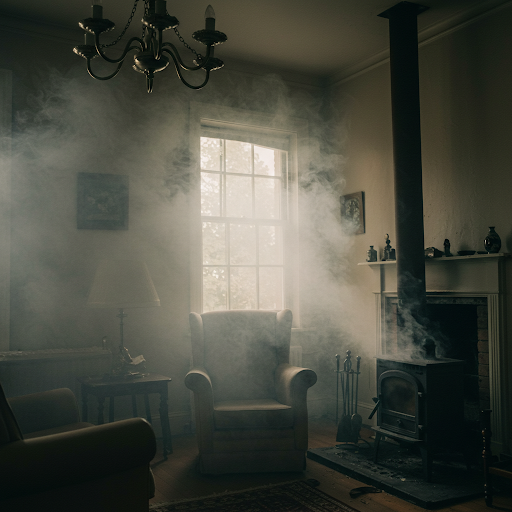
There’s nothing quite like the cosy warmth of a fireplace or stove. But when smoke starts puffing back into the room, or you feel a cold draught coming down the chimney even when it’s not lit, that cosy feeling quickly vanishes. This is chimney downdraught, and it’s not just unpleasant – it can be dangerous.
If you’re asking yourself, “how do I stop downdraught in my chimney?”, good choice on choosing this blog. At Home Sweep Home, we deal with chimney problems daily. This guide will explore the common causes of downdraught and, crucially, explain the potential solutions.
Understanding Downdraught: When Your Chimney Works in Reverse
Normally, your chimney operates on the “stack effect”. Hot air and combustion gases from your fire are lighter than the surrounding air, causing them to rise naturally up the flue and exit safely outside. Downdraught occurs when this process is disrupted or reversed, forcing air and potentially smoke back down the chimney and into your living space.
Why is My Chimney Downdraughting? Uncovering the Causes
Identifying the reason for the downdraught is the critical first step towards finding the correct solution. Here are the most common culprits:
1. Lack of Ventilation & House Depressurisation:
- The Problem: Modern homes are increasingly airtight to improve energy efficiency. Whilst this is great for heating bills, it can starve your house – and your fire – of the air it needs. Extraction fans (in kitchens and bathrooms), cooker hoods, tumble dryers, and even the fire itself consume air from within the property. If there isn’t enough replacement air coming in through dedicated vents, the house becomes ‘depressurised’ or experiences ‘negative pressure’.
- The Effect: Your house desperately tries to draw air in from wherever it can. Often, the path of least resistance is straight down the chimney flue. This pulls smoke back into the room when the fire is lit, or simply causes a cold draught when it isn’t.
2. Topography, Tall Buildings & Trees (External Wind Effects):
- The Problem: The landscape around your property significantly influences wind patterns.
- Wind Hitting Obstacles: If your house sits near tall buildings, dense trees, or even steep hills, wind hitting these obstacles can create zones of high pressure near your chimney pot. This increased pressure can literally push air back down the flue.
- Wind Flowing Over Obstacles: As wind flows over the top of your roof, nearby buildings, or trees, it can create turbulence just above the chimney terminal. This disturbed air can be forced down the chimney.
- The Effect: Both scenarios disrupt the smooth upward flow of air and smoke, leading to downdraught, particularly during windy conditions.
3. Temperature Differentials (Cold Chimney Syndrome):
- The Problem: The stack effect relies entirely on the column of air inside the chimney flue being warmer (and therefore lighter) than the air outside. When a chimney is cold – either because a fire hasn’t been lit recently, or it’s an unused flue – the column of air inside it is cold and heavy.
- The Effect: If the air inside the chimney is colder and denser than the outside air, gravity takes over. The cold air plug will sink, pushing air (and any residual smells) down into your room. This is pure physics in action and often happens when you first try to light a fire, or persistently in unused chimneys.
The Dangers of Ignoring Downdraught
Downdraught isn’t just a nuisance; it poses real risks:
- Carbon Monoxide (CO) Poisoning: This is the most serious danger. CO is a poisonous gas produced by incomplete combustion. If smoke is coming back into your room, CO likely is too. It’s odourless, colourless, and potentially fatal. Ensure you have working CO alarms correctly sited.
- Smoke Inhalation: Breathing in smoke particles is harmful to your lungs and overall health.
- Soot Staining & Odours: Downdraught can cause unpleasant smoky smells and unsightly soot staining around your fireplace and in your room.
- Dust Inhalation: Downdraught blows hazardous chimney debris like allergenic dust and carcinogenic soot into your home. This significantly impacts allergy sufferers and poses a health risk, requiring action to prevent downdraught and ensure the chimney is kept clean.
How to Stop Downdraught: Finding the Right Solution
Because there are different causes, there isn’t a single magic fix. Applying the wrong solution can be ineffective and a waste of money.
Step 1: Professional Diagnosis – Sweeping and Consultancy
Before attempting any solution, you MUST understand the specific cause of your downdraught.
- Get Your Chimney Swept: A blocked chimney (from soot build-up or bird nests) can mimic downdraught; people often think smoke backing up and downdraught are the same thing. A professional sweep by Home Sweep Home will ensure the flue is clear and allow for a basic assessment.
- Consider Expert Chimney Consultancy: For persistent or complex issues, identifying the exact cause requires expertise. Home Sweep Home offers a Professional Chimney Consultancy Service. This specialised service involves a detailed analysis of your property, appliance, ventilation, and surrounding environment to pinpoint the precise reason for the downdraught and recommend the most effective solutions.
Step 2: Implementing the Correct Solution
Based on the diagnosed cause, here are the potential remedies:
- If Caused by Lack of Ventilation / Depressurisation:
- Solution: Add Purpose-Built Ventilation. The only effective fix is to provide sufficient replacement air. This usually involves installing appropriately sized air bricks in the room with the appliance or ensuring adequate trickle vents in windows are present and open. The required amount of ventilation depends on the appliance type and output – something our consultancy service can calculate.
- If Caused by External Wind Effects (Buildings/Trees):
- Solution (Wind Blowing Over Obstacles): Fit an Anti-Downdraught Cowl. Specialised cowls are designed to use wind movement to create uplift or prevent wind from blowing directly down the flue. Different designs tackle different wind conditions (e.g., static cowls, rotating cowls, OH Cowls). Choosing the correct type of cowl for your specific situation and fuel type is vital.
- Solution (Wind Hitting Obstacles): Increase Chimney Height. If high pressure caused by wind hitting nearby obstructions is the problem, extending the chimney stack’s height can lift the terminal above the turbulent zone. Regulations often dictate minimum heights (e.g., typically needing to be at least 600mm above the roof ridge or 2.3 metres horizontally from any obstruction), but a site assessment is needed.
- If Caused by Temperature Differentials (Cold Chimney):
- Solution (When Lighting Fire): Pre-warm the Flue. Before building your main fire, burn some rolled-up newspaper or small kindling near the throat of the chimney. This helps establish a warm updraught to overcome the cold air plug.
- Solution (For Unused Chimneys): Block the Draught (Carefully!). You can’t easily defy physics, but you can manage the symptom in unused flues:
- Chimney Sheep™ / Balloons: These are purpose-made, removable flue blockers often made from breathable materials like Herdwick wool. They effectively stop the draught whilst allowing a tiny amount of ventilation to prevent damp.
- Temporary DIY Blocking: As a temporary measure only, some people stuff a bin bag loosely filled with insulating material (like newspaper or loft insulation) up the chimney throat. Crucially, never create an airtight seal, as this traps moisture and can cause damp problems. This is not a recommended long-term solution, and professional advice is always preferable. Remember to remove any blockage before attempting to light a fire!
Don’t Guess – Get Expert Help
Trying to fix chimney downdraught without understanding the root cause can be frustrating and potentially dangerous. A correctly functioning chimney is vital for your safety and enjoyment of your fire.
If you’re struggling with downdraught in your chimney, contact Home Sweep Home today. We can provide professional chimney sweeping and, through our Expert Chimney Consultancy Service, offer the detailed analysis needed to solve your problem effectively.
Call us: 07785563364
[…] top the list. Are you wrestling with a smoky fireplace, baffling draughts (perhaps needing help to stop chimney downdraught), or strange noises from the flue? Planning a renovation and unsure how it impacts your chimney? Or […]
Comments are closed.