



The Beginning
The history of chimney sweeps – A lot of people believe chimney sweeps have been around in the UK since the Norman conquest of England by William the Conquerer in 1066. This is not true; we didn’t have traditional chimneys then. When a fire was in a room/building, it tended to simply have a vent or hole in the ceiling, or simply venting through windows. This theory seems to be accompanied by the apocryphal story that William the Conqueror was saved by a chimney sweep when his horse bolted. That chimney sweep must have been pretty short of work, and pretty dead by the time the first chimneys were introduced – the first having been built in a castle in the 12th century.
Introduction of chimneys
Chimneys became more prevalent in the Tudor times; around the time of Queen Elizabeth I in the 16th century. At this time though, chimneys were very much reserved for the wealthy, the poor still living with a smokey house and a hole in the ceiling! Though helpful for avoiding a smokey house, a number of these chimneys were made with timber and lined with clay, which though mostly worked without issue, chimney fires could be catastrophic. By 1719, all such chimneys were ordered to be rebuilt of brick
The first chimney sweeps
The history of chimney sweeps – it is not known exactly when the first chimney sweeps appeared in the UK, but it was likely around the 16th century. Chimney sweeps weren’t the only things cleaning chimneys however; people would throw geese or chickens down the chimney, or pull big bunches of holly tied onto a rope to scrape the walls of the flue.
Chimney Sweeps really came to prevalence in the 17th century around the time of the Great Fire of London in 1666. The great fire brought about far more concern related to fire safety, and small boys were introduced into the world of chimney sweeping. It was believed that small boys could do a better job removing all of the combustible soot from the chimney to prevent chimney fires. Around this time, chimneys were also made smaller in order to increase the velocity of the smoke travelling up the chimney and increase the temperature in the flue so the amount of soot produced was reduced, and chimneys were less likely to ignite.
Children were apprenticed by a Master Sweep. Often these apprentices were orphans. It was a very unfortunate job for the children, who could have been as young as 3, and the life expectancy was low. Children would often become wedged in the chimneys, which were as small as 9 inches by 9 inches (230mm x 230mm), and little fires would sometimes be lit in the fireplace to speed the boys (and sometimes girls) up. Master Sweeps were often known to have sticks with sharp ends that they would use to stab the children in the feet to hurry them if they were at all scared or hesitant. It wasn’t as uncommon as you may hope for children to die in the flues If they became stuck, they sometimes could not remove the children without breaking a hole in the chimney wall further up in the house. This however was reliant on the homeowner valuing the life of a child more than the decor of their house.
Chimney Sweepers Act
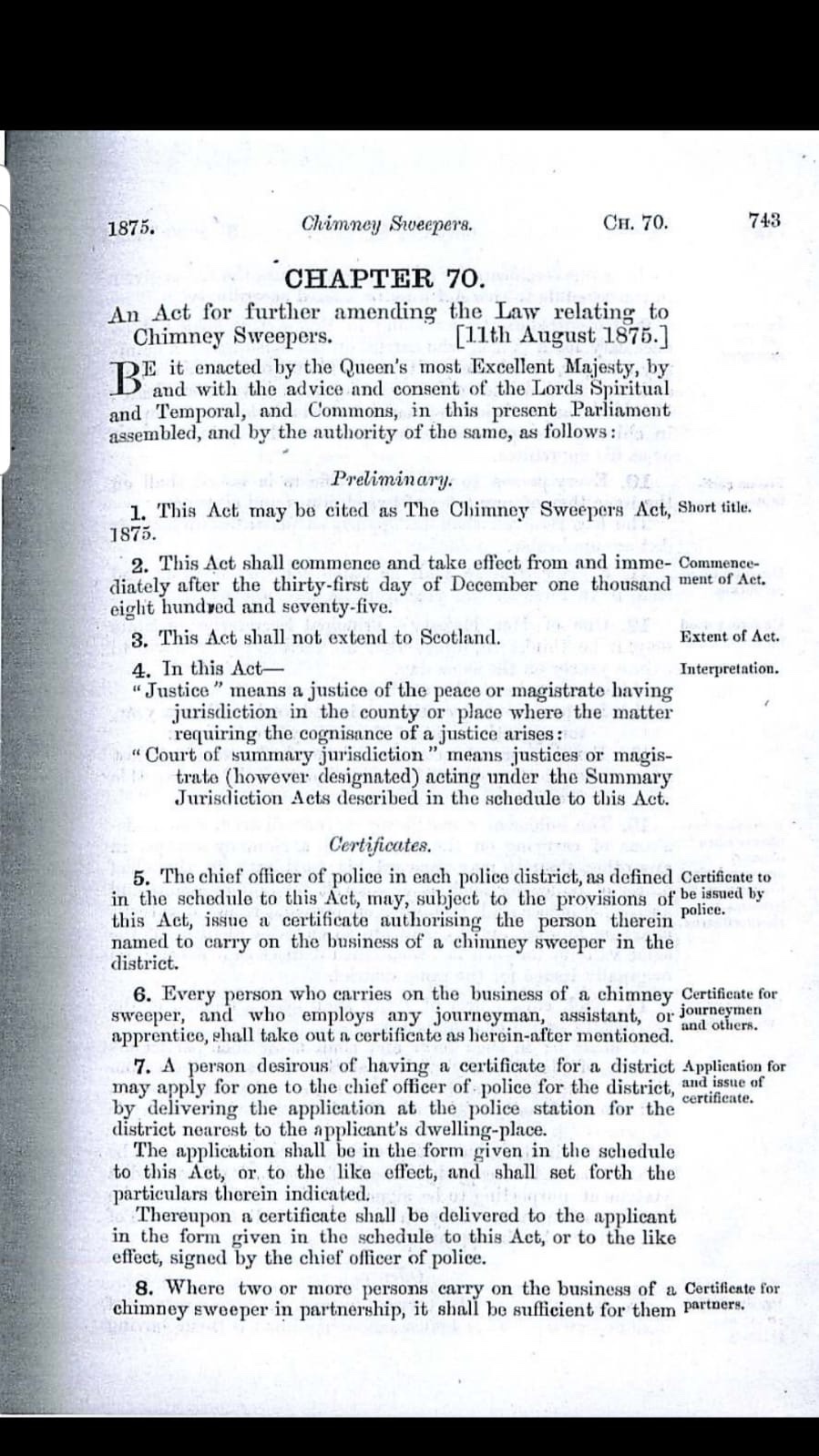
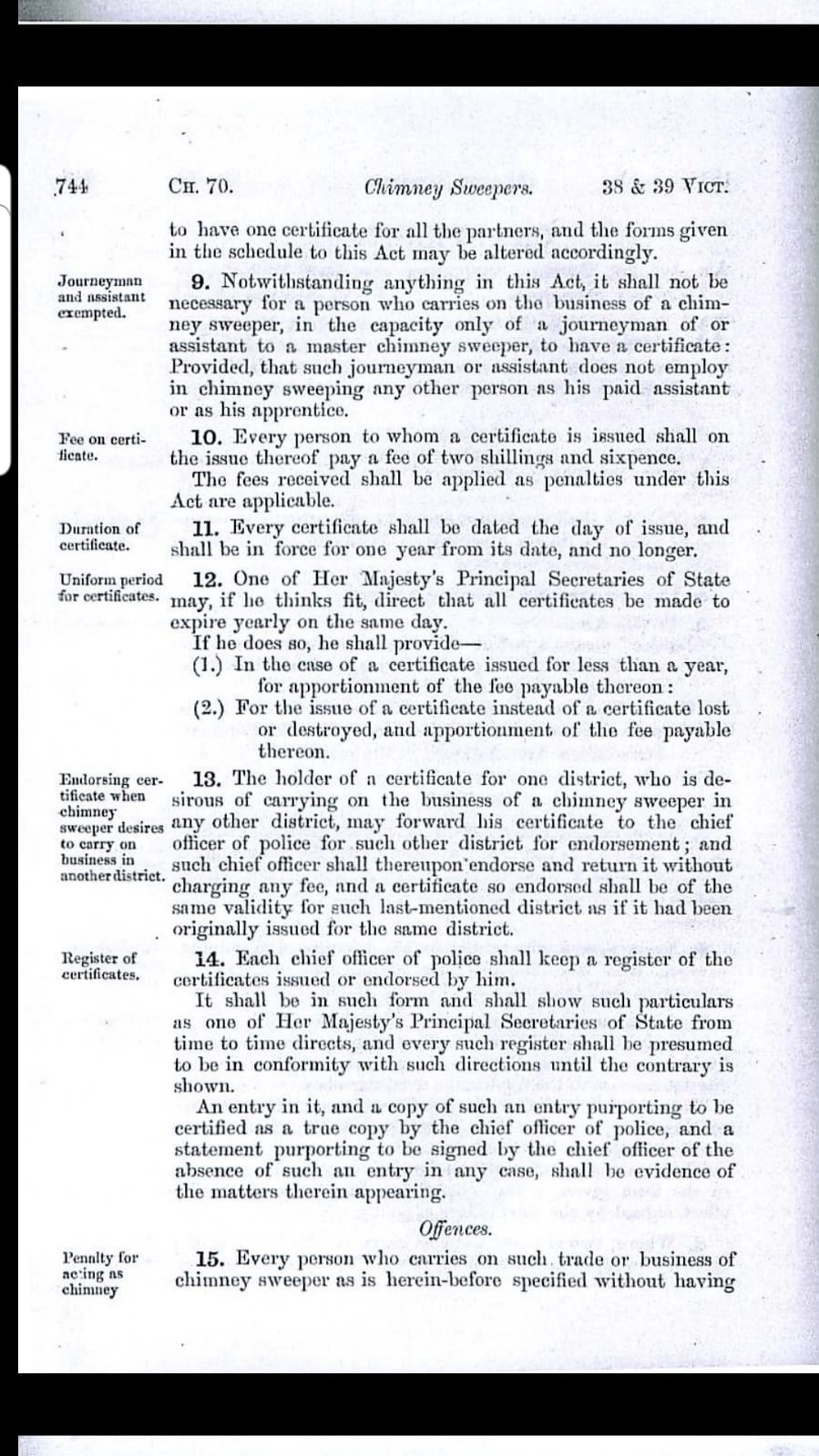
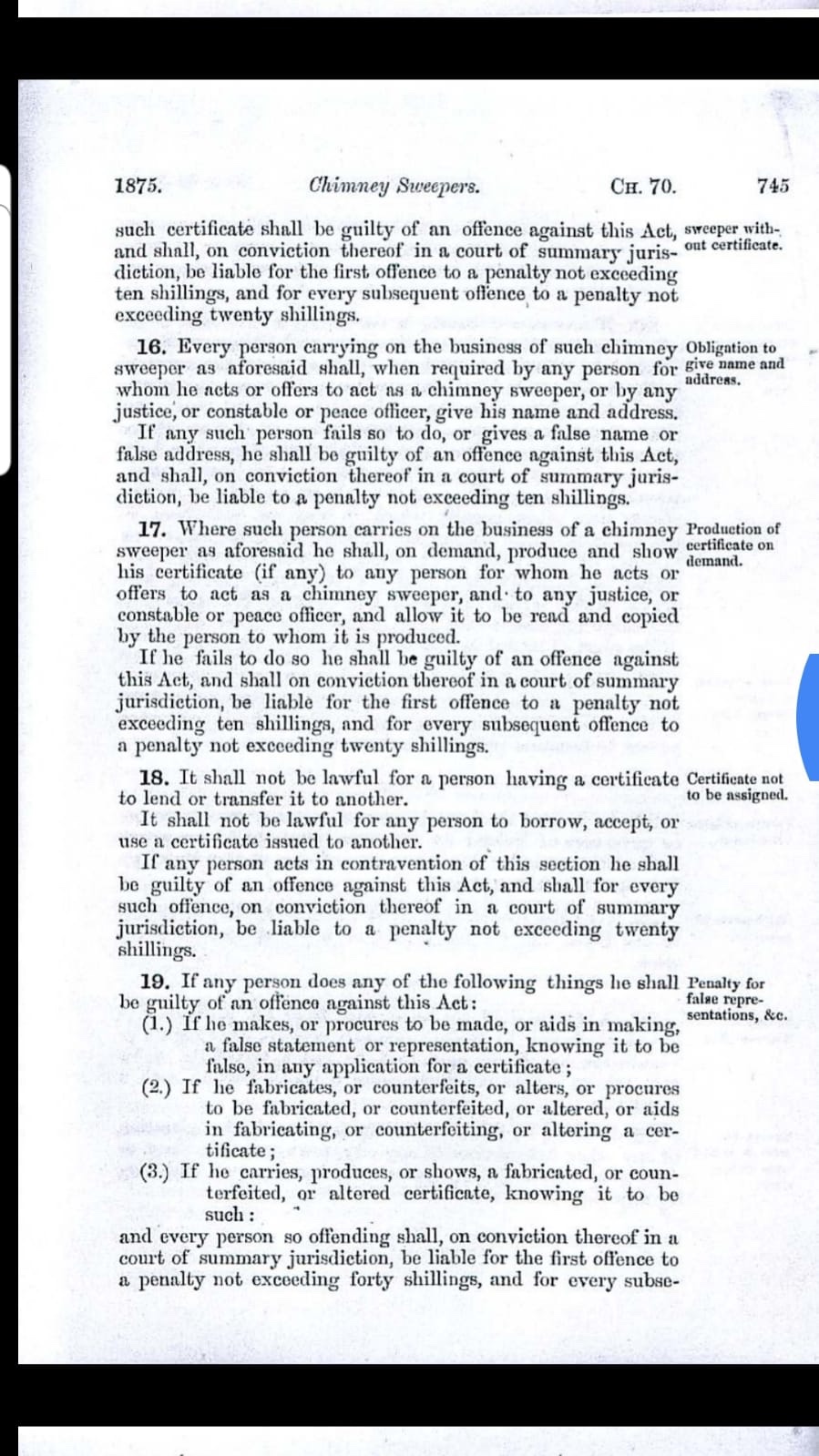
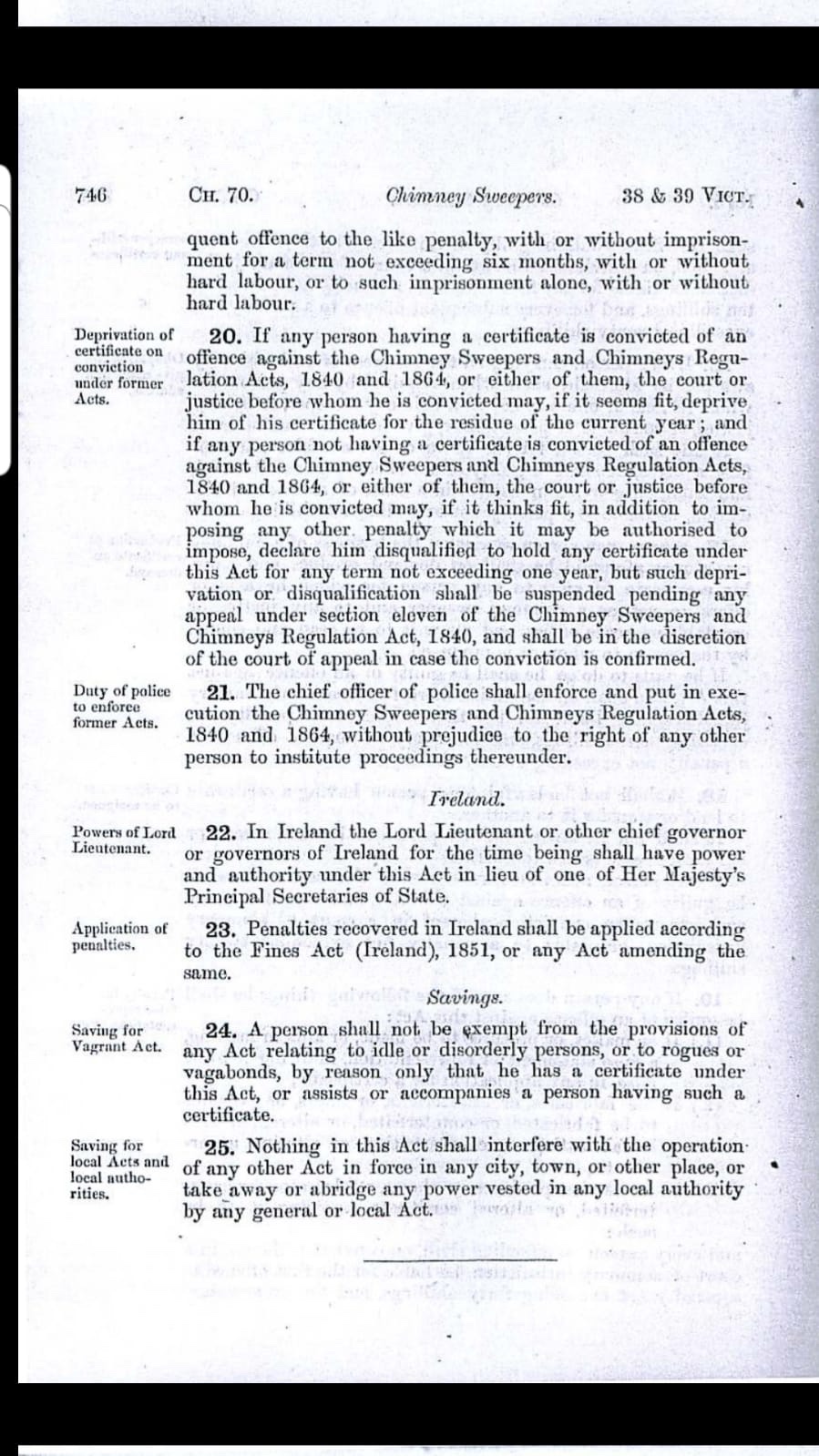
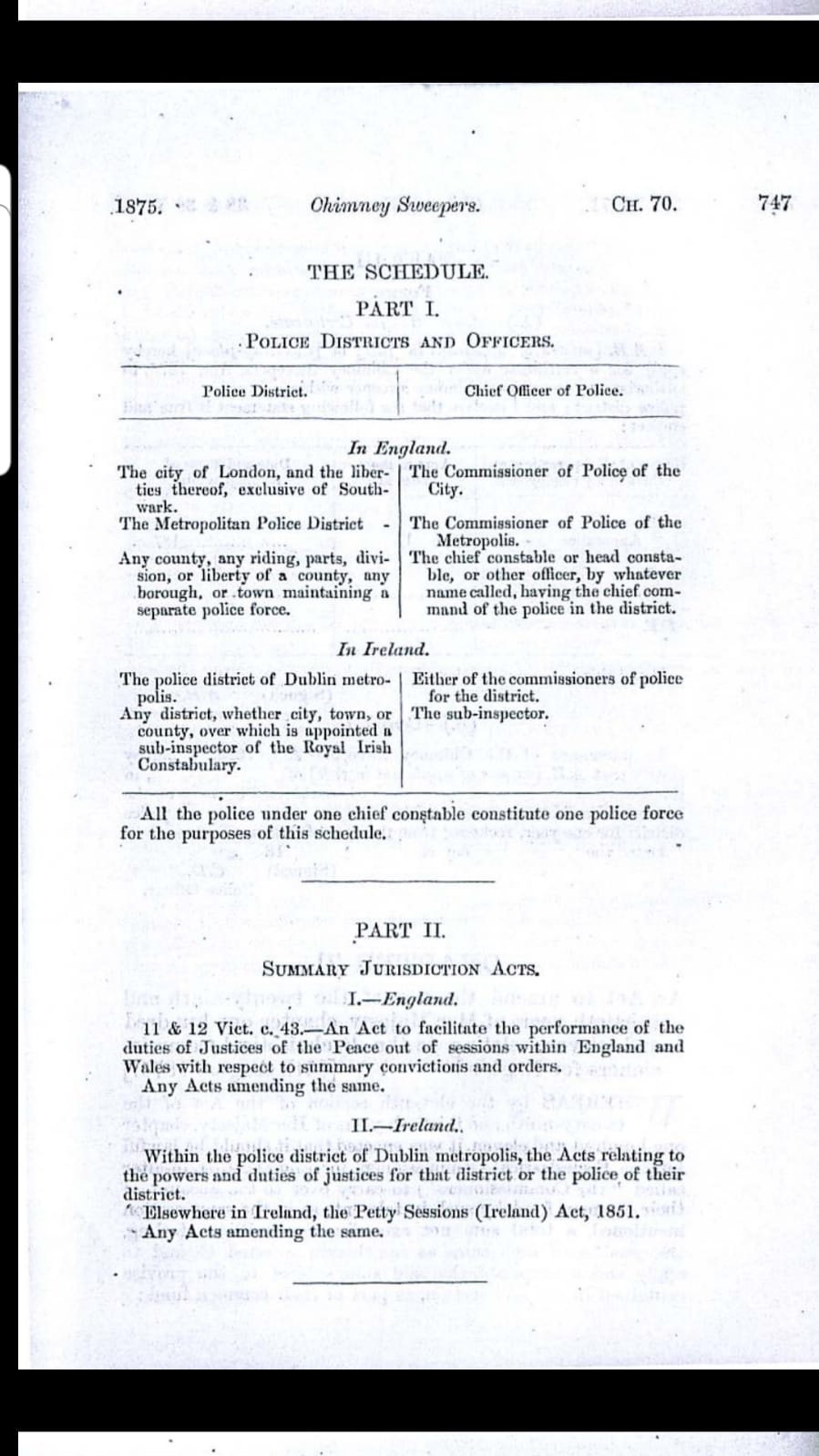
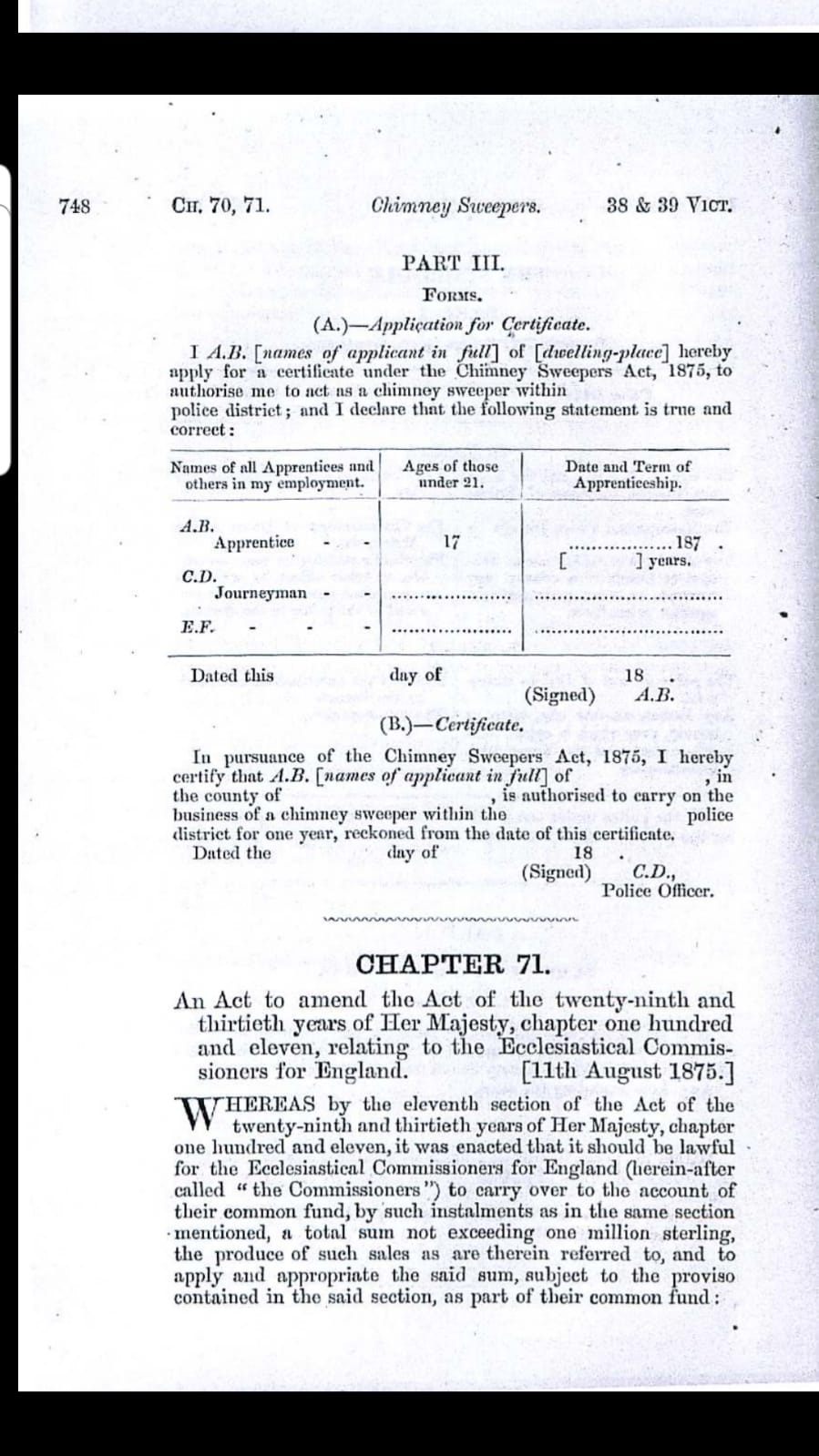
In 1875 came The CHIMNEY SWEEPERS ACT. This updated previous acts, such as the chimney sweepers act of 1840 which raised the minimum age of apprenticeships to 16. This act was largely ignored though, as there was very little enforcement. The act of 1875 differed in that it required sweeps to be licensed and the police were given the duty of enforcement. This, along with publications such as The Water-Babies by Ben Kingsley raising awareness amongst the public, very much brought the end to the climbing boys and child chimney sweeps.
Evolution of the Chimney Sweep
The history of chimney sweeps – Chimney sweeps have slowly evolved over the generations, from the climbing boys, to extendable rods and brushes or a rope with a weight and brush, to a few forward thinking chimney sweeps introducing vacuum cleaners into their repertoire in the late 1940’s to early 1950’s..
The role of these chimney sweeps has for the best part remained the same: Cleaning Chimneys; finding faults with chimneys; inspecting chimneys; rescuing wildlife in chimneys; solving chimney issues; advising on how to best use the appliance etc. Now though, the chimney sweeps have an array of advanced equipment to make these inspections more thorough, quicker and more detailed. There are also now more methods to sweep the chimney.
Once considered a dirty job carried out by men, times are moving on. Chimney Sweeping now is a mess free process. Though still a dirty job for the sweep carrying out the work, they stay much cleaner than they once did. There are also no prejudices – there are plenty of female chimney sweeps as well as male. Traditionally there were occasionally female sweeps, but it wasn’t a common occurance. Fortunately now it is becoming more and more prevalent.
For the inspection side, sweeps now have items such as chimney CCTV systems, which they use to look for faults in the chimney for various reasons: Party wall issues, inspections to have a new fireplace fitted, or to check for blockages and similar. They also might carry what is referred to as a pressure testing machine (usually a Wohler DP 600). These machines are mostly used as chimney leakage testers. The chimney is blocked at both ends, the machine pumps air into the chimney and using a probe to detect the pressure of the air in the chimney reveals the leakage rate in the chimney. In terms of new methods of sweeping, there is the Viper, which is one continuous rod coiled on a reel, designed for sweeping narrow flues. Then there is Rotary Power Sweeping, which are extendable rods which are spun by a drill. The top rod will be attached to a brush or whip which is the implement which is used to clean the chimney.
As well as this, there are initiatives involving chimney sweeps such as Burnright, which help to represent the vast knowledge of chimney sweeps.
Folklore – Chimney Sweeps Lucky?
Chimney sweeps across the world are often considered lucky. In the UK they were traditionally invited to weddings, and sweeps would ask their customers to see the brush out of the top of the chimney for ‘luck’. The origins of this are not certain. They range from Roman times, and the association between soot and fertility; Vulcan, the God of Fire and Forge, having been married to Venus, the Goddess of Love, to the story of King George II in the 18th Century. A stray dog startled the Kings Horse, causing him to bolt. A brave chimney sweep supposedly ran out from the crowd and calmed the horse. The King gratefully declared chimney sweeps were lucky. As with all folklore, the origins will likely never be fully known. But it is certainly an interesting subject to consider.

The history of chimney sweeps


[…] Click here for a brief history of our profession […]
Comments are closed.